
TMS Therapy
Transcranial Magnetic Stimulation (TMS): A Non-Invasive, Medication-Free Route to Relief
Transcranial Magnetic Stimulation (TMS) is an innovative, non-invasive treatment for depression – particularly well-suited for people who haven’t responded to conventional antidepressants or talk therapy.
Understanding TMS Therapy
TMS provides a fast-acting, drug-free option for those struggling with their mental health. It’s an important alternative for patients with treatment-resistant depression, or for anyone seeking to avoid the systemic side effects that often accompany oral medications.
Clinically Demonstrated Effectiveness
A substantial body of research shows that approximately two in three patients who undergo TMS treatment experience meaningful clinical improvement.
Medication Transition Support
With proper medical oversight, TMS can support patients who want to gradually reduce their antidepressant use or move away from medication altogether. The magnetic stimulation helps provide critical neurological support throughout that journey.
Take the First Step
We’re here to help you find a path forward. Fill out the brief form below and a member of our care team will reach out to you shortly. Thank you!
Frequently Asked Questions
What is TMS therapy?
Transcranial Magnetic Stimulation (TMS) — also called repetitive TMS, or rTMS — is a non-invasive neurological treatment that uses precisely targeted magnetic pulses to activate nerve cells in the brain regions responsible for mood regulation. By enhancing neurotransmitter function, these pulses can make long-term remission achievable, even for patients who haven’t responded to other treatments.
What conditions can TMS address?
TMS has received FDA approval for:
- Severe Major Depressive Disorder (in cases where medication has been ineffective)
- Obsessive-Compulsive Disorder (OCD)
- Anxious Depression
TMS can also be used off-label for conditions including PTSD, tinnitus, and smoking cessation. Clinical evidence supports these applications, though insurance coverage for off-label uses is generally limited.
What does a session involve?
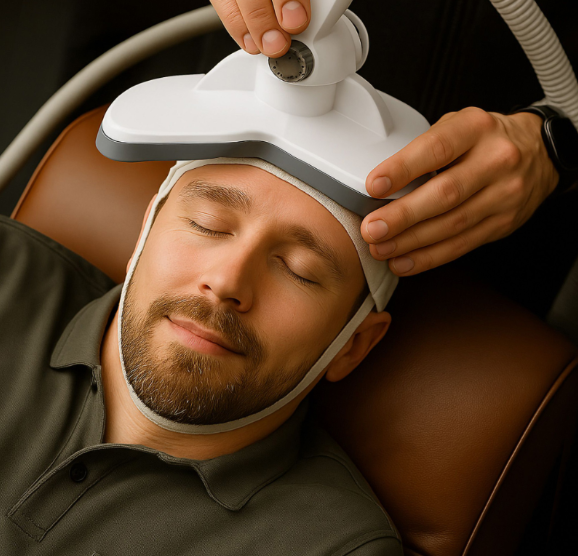
Each 30-minute session is spent relaxing in a treatment chair while a small magnetic coil rests gently against your scalp. You’ll notice a soft tapping sensation and a rhythmic clicking sound as the coil painlessly activates the brain’s mood-regulating areas. Many patients pass the time listening to music or an audiobook. No sedation is needed, so you’re free to drive yourself to and from your appointment and continue with your day as normal.
How soon can I expect results?
Unlike conventional antidepressants, which may take six weeks or more to take effect, TMS tends to work more quickly. A number of patients notice mood improvements within the first week. For the most lasting outcomes, a full course of around 36 sessions is generally recommended.
Who administers TMS?
TMS is prescribed by a provider with specialized training in TMS protocols and motor threshold mapping. Your daily sessions are then conducted by a trained technician under that provider’s close supervision.
How long are sessions, and how long is the overall course?
Individual sessions are approximately 30 minutes. A typical treatment course involves five sessions per week over a seven-week period, though this schedule can be tailored to your clinical needs.
Are there side effects?
TMS is generally very well tolerated. The most common side effect is a mild headache, which tends to fade within the first couple of weeks and typically responds well to over-the-counter pain relievers. Occasional minor scalp discomfort at the treatment site may also occur but usually resolves quickly.
Who should not receive TMS?
Patient safety is our top priority. Anyone with non-removable metallic implants in or near the head — with the exception of braces or dental fillings — is not a suitable candidate for TMS, as the magnetic field can cause such objects to shift or heat up.
Contraindications include:
- Aneurysm clips or coils
- Stents located in the brain or neck
- Deep brain stimulators
- Brain activity monitoring electrodes
- Metallic implants in the ears or eyes
- Bullet fragments or shrapnel near the head
- Facial tattoos containing metallic or magnetically sensitive ink
- Any other metallic devices implanted in or near the head
What if my insurance doesn't cover TMS?
Our team will work diligently to obtain prior authorization from your insurance provider. If coverage isn’t available, we offer a self-pay option, with pricing based on your diagnosis and the complexity of your condition. Reach out to us to arrange a consultation.
Ready to schedule an appointment?
Get in touch, or learn more.